

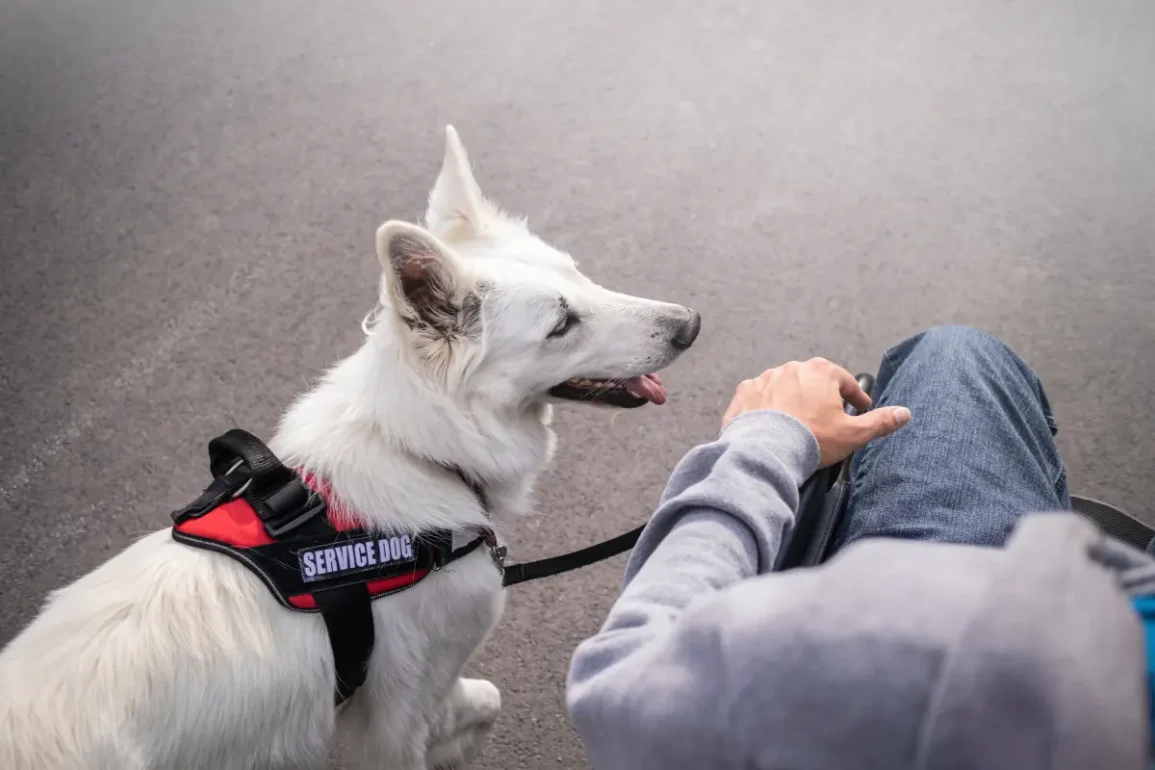
Flying with an assistance dog is possible on most European airlines. This guide sums up the key rules, which dogs are recognised, what paperwork you need and how to avoid the most common issues on flights.
What to know about flying with assistance dog
Most European airlines allow assistance dogs to fly in the cabin, but each carrier has its own way of handling them. Below you’ll find what airlines usually expect from you and your dog, so you know what to sort out before you book a flight.
Quick facts about flying with an assistance dog
- Since 2021, most airlines no longer treat emotional support animals as service animals – they now travel under standard pet rules.
- A trained assistance dog can usually fly in the cabin with you, free of charge, if the airline approves it in advance.
- Many airlines want your assistance dog form and documents 48–72 hours before departure, not on the day of the flight.
- On board, the dog lies on the floor by your feet and can’t block the aisle or sit in an exit row.
- Some airlines only accept “recognised assistance dogs” – dogs from approved training organisations; others are more flexible but still expect proof of training.
- Airline can refuse a dog that is aggressive, out of control or too big to fit safely in the available space.
Assistance dog travel requirements and dog forms
Most airlines will first check who trained your dog and then look at the usual travel papers. That’s why the rules can feel so different from one carrier to another.
Below you’ll find two basic groups: airlines that only take recognised assistance dogs, and those that can sometimes accept other trained dogs as well.
Airlines that only accept recognised assistance dogs
Some airlines will only take dogs that come from an approved training organisation. In practice this usually means a school accredited by Assistance Dogs International (ADI), Assistance Dogs UK/Europe, or the International Guide Dog Federation (IGDF).
- Ryanair – requires the dog to be trained for a specific task and certified by an ADI, Assistance Dogs UK or IGDF member organisation. Pets, ESAs and privately trained dogs are not accepted.
- easyJet – accepts only “recognised assistance dogs”; in practice that means dogs trained by ADI / IGDF-type organisations that meet EU and UK standards.
- Lufthansa and some other German carriers – ask for a training certificate from an accredited school (ADI, ADEu, IGDF) or a recognised specialist trainer; self-trained or “online trained” dogs are explicitly not accepted as assistance dogs.
If your dog is owner-trained and you don’t have a clear training certificate, these airlines will usually only let them travel as a pet, not as an assistance dog.
Airlines that can accept other trained assistance dogs
Other carriers focus more on the actual behaviour and training level than on one specific organisation. They still want proof, but are sometimes more flexible about where the dog was trained.
- KLM – allows trained service dogs in the cabin free of charge and looks mainly at behaviour and documentation; in some cases, privately trained dogs have been accepted when solid proof of training was provided.
- Air France – accepts trained service dogs in the cabin at no extra cost if you can provide credible proof of training and of your need for the dog.
- British Airways and several other European airlines – also allow trained service dogs and may accept dogs that weren’t trained by ADI/IGDF schools, as long as the training and tasks are clearly documented.
Even with these airlines, you’ll still need the basics such as microchip, valid rabies vaccination, and either an EU Pet Passport or the health certificate depending on your destination. Some non-EU countries add their own extra rules, so it’s safer to check those well before you book.
Major European airlines that allow flying with assistance dogs in the cabin
- Lufthansa – accepts trained assistance/service dogs in the cabin free of charge on all routes, with training certificate required and advance registration.
- SWISS – only trained assistance dogs are accepted in the cabin (since 1 March 2021); ESAs are no longer treated as assistance dogs.
- Austrian Airlines – allows trained assistance dogs in the cabin if you notify them in advance and meet their conditions.
- KLM – accepts trained service dogs in the cabin free of charge when they fit in the foot space and all documents are approved.
- Air France – allows trained guide and service dogs in the cabin at no extra cost if you request it and provide the required documentation.
- British Airways – carries assistance dogs in the cabin free of charge on all BA flights, with advance booking and approval.
- Finnair – accepts specially trained and certified assistance/service dogs in the cabin without extra charge.
- SAS (Scandinavian Airlines) – service dogs travel free of charge in the cabin; the dog must be fully trained and lie on the floor without blocking the aisle.
- Norwegian – allows assistance/service dogs in the cabin on most routes (with some UK-related exceptions) if booked and approved in advance.
- Iberia – accepts assistance dogs (SVAN) in the cabin free of charge for passengers with disabilities, with certification from a recognised training centre.
- LOT Polish Airlines – guide and assistance dogs can travel in the cabin free of charge, without weight limits, if recognised and properly documented.
- TAP Air Portugal – service dogs (guide, hearing and other service dogs) usually fly in the cabin at no extra cost, under specific handling rules.
- Vueling – accepts assistance/service dogs in the cabin under its assistance-animal policy (separate from standard pet-in-cabin rules).
- Ryanair – does not allow pets, but does accept certified guide/assistance dogs in the cabin on certain routes, free of charge.
- easyJet – no pets, but recognised registered guide and assistance dogs are allowed in the cabin on eligible routes.
- Wizz Air – pets are not allowed, but guide and assistance dogs are accommodated in the cabin free of charge on flights within and from the EU.
- Turkish Airlines – accepts service dogs in the cabin at no extra charge on many routes, provided all required documents are submitted in advance.
How and when to submit the airline assistance dog form
You’ll usually find the form in “Manage booking” or on the airline’s special assistance page. Most airlines want it 48–72 hours before departure, so don’t leave it to the day before.
Fill in your booking details, what your dog is trained to do, and upload any training proof or medical note they ask for. Then keep the approval email ready on your phone at check-in.
Flying to or from the United States?
For flights with US airlines – or journeys that start or end in the US – you may also need the DOT service animal form. It’s a separate document required under US rules, not European ones. You can find a step-by-step guide here.
What airlines recognise as a trained assistance dog
For airlines, a “trained assistance dog” is more than a calm pet. The dog should do specific tasks that help you manage a disability or medical condition, and to do it reliably in busy places like airports and cabins.
Most airlines look at three things: how the dog was trained, how it behaves in public, and whether it clearly works for one person. Many prefer dogs that came through recognised training schools, but what really matters on the day is control – no barking, lunging, begging for food or wandering around the aisle.
Self-trained dogs can sometimes be accepted, but only if you can prove solid training and the dog behaves like a working animal, not a companion on holiday. Emotional support animals or “comfort dogs” usually don’t qualify, even if they are very well behaved.
If you keep this in mind when you travel – clear task work, good manners in public and honest documentation – you’re already very close to what airlines mean when they say “assistance dog”.
Assistance dog vs emotional support dog vs therapy dog
On paper these three can look similar, but airlines treat them very differently. Understanding the difference saves a lot of confusion so here we break it down for you.
Since 2021, most airlines have stopped treating emotional support animals as a special category. They’re no longer recognised as service animals and, on most routes, they now travel under the standard pet rules – with weight limits, carrier requirements and pet fees, just like any other dog.
Assistance dog
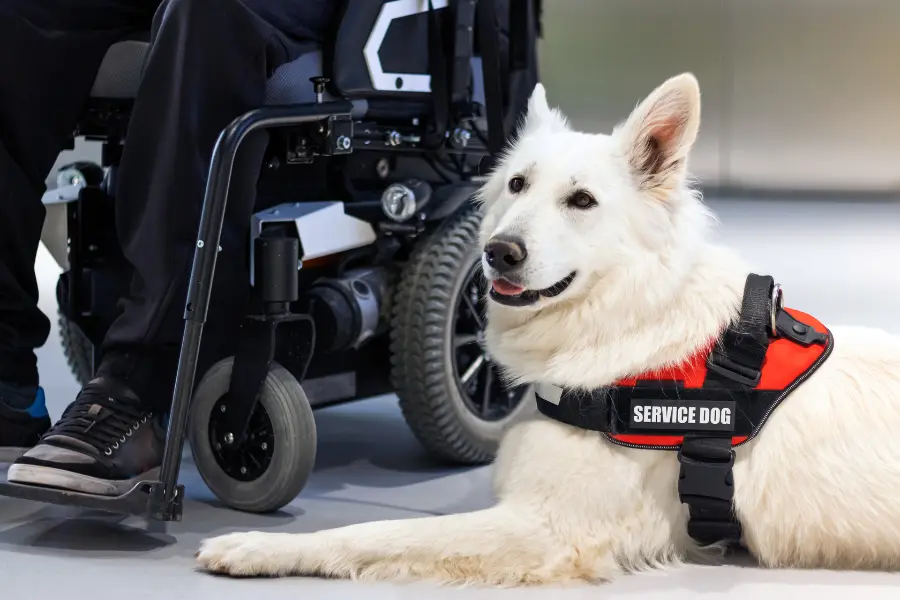
An assistance dog (or also a service dog) is trained to do specific tasks that help one person with a disability or medical condition such as guiding a blind handler, alerting to seizures or low blood sugar, helping with mobility or interrupting panic attacks.
These dogs are usually traveling in the cabin for free, as long as they’re trained and the airline accepts them. They should be calm as well as ignore other people and animals, and focus mainly on their handler.
Emotional support dog
An emotional support dog provides comfort mainly through its presence. It doesn’t have to be trained to perform specific tasks, and that’s the main difference from an assistance dog.

Since 2021, most airlines no longer treat ESAs as service animals. On flights they’re usually carried under the normal pet policy – with weight limits, pet fees and a carrier if required. Even if you have a letter from a doctor, your emotional support dog will normally be booked and handled like any other pet.
Therapy dog
A therapy dog is trained to visit hospitals, schools or care homes and provide comfort to many different people. It works in a team with its handler, but it’s not linked to one specific person with a disability.
Because of that airlines do not consider therapy dogs to be assistance dogs. So when flying, they travel just like any other pet.
Common issues when flying with assistance dog
Most problems start with paperwork – a missing form, an expired rabies vaccine or documents recieved too late. The simplest fix is to make sure you upload everything a few days even weeks before you travel, not at the last minute.
Another common issue is that the airline doesn’t recognise the dog as an assistance dog, especially with owner-trained dogs or “online certificates”. It’s worth checking in with your airline what proof of training they accept and whether they only take recognised assistance dogs.
FAQ about service dog flying
Can I take a service dog on a plane?
Yes, most airlines allow trained assistance or service dogs in the cabin. You need to notify the airline in advance and provide the documents they ask for (forms, medical note, travel papers for the dog).
Do European airlines allow service dogs?
Yes, European airlines generally accept recognised assistance dogs in the cabin free of charge, as long as the dog is properly trained and the paperwork is approved before the flight.
Can a service dog sit on your lap on an airplane?
Normally no. Airlines expect assistance dogs to stay on the floor by your feet for safety reasons. Small dogs may sometimes curl up partly on your lap once the seat belt sign is off, but this is always at the crew’s discretion.
Where do service dogs sit on planes?
They usually lie on the floor in front of your seat or in a space agreed with the crew. The dog can’t block the aisle or any emergency exit.
Can a service animal be denied access?
Yes. An airline can refuse a dog that is aggressive, out of control, too large for the available space, or if the required documents are missing or incorrect.
Can my dog fly with me as emotional support?
In most cases, no. Emotional support dogs are now treated as normal pets, so they must follow the standard pet policy (weight limits, fees, carrier) and don’t have the same rights as assistance dogs.
What documents do I need to fly with an assistance dog?
You’ll usually need an airline assistance dog form, any medical note they ask for, plus your dog’s travel papers: microchip, rabies vaccination and pet passport or health certificate for your route.