


Emirates is a popular airline, but not a pet-friendly one in the modern sense. Before you book, it’s important to understand the limits, restrictions, and alternatives when traveling with a pet.
Complete guide of Emirates pet policy
Emirates is one of the most well-known airlines in the world, but when it comes to flying with pets, it’s far from ideal — especially compared to many European airlines and the western standards. There’s no option to fly with pets in the cabin (except for service dogs), the rules are strict, and breed restrictions apply even for pets traveling in the hold.
In this guide, we explain how pets can travel with Emirates, what isn’t allowed, and when SkyCargo is the only option, so you know exactly what to expect before booking.
- Summary ›
- Emirates pet in cabin ›
- Pet in hold/Emirates SkyCargo ›
- How to book your pet’s flight ›
- Required documents ›
- Emirates approved crate ›
- Tips ›
- Pros & Cons ›
- FAQ ›
1. Overview of Emirates airline pet policy
- Accepted Travel Options:
- ❌ In cabin: No* (Only service dogs and falcons on selected routes are allowed)
- ❌ Checked baggage: No, Emirates does not generally accept pets as checked baggage. Most pets must travel via cargo.
- ✅ Cargo: Yes via Emirates SkyCargo
- Minimum age: Usually 12 weeks, depending on destination and import regulations
- Main transit hub: Dubai International Airport (DXB)
- Banned breeds: Emirates applies strict breed restrictions. Some dog breeds are not accepted as checked baggage at all and must travel via cargo only. More here.
- Link to the Emirates website
2. Emirates pets in-cabin policy
Emirates does not allow regular pets in the cabin, regardless of their size or weight. Even very small dogs that would normally fly under the seat on European airlines are not accepted.
However there are two exceptions. Certified service dogs may travel in the cabin on selected routes and falcons are allowed on certain routes, mainly in the Middle East and South Asia (for example Pakistan), under very specific conditions.
3. Dogs in hold or Emirates SkyCargo
When you fly with a dog or cat on Emirates flights, your pet will have to travel either as a checked beggage or via cargo.
In hold as checked baggage
Emirates is not only a pet friendly option when it comes to traveling with pet in cabin, similar approach applies also for your pet flying as checked baggage. Emirates say they maintain high safety standards for animals traveling in hold, and that reflects on the list of restricted breeds for this type of travel that is so much bigger than any other airline.
Also the price is more on the higher end ranging from $500 to $800 depending on the total weight. More on it here.
Emirates dog policy on restricted breeds for checked baggage (A-Z):
Emirates have very strict breed restrictions. Based on information shared with us by an Emirates agent, many dog breeds are not accepted even as checked baggage and therefore must fly via Emirates SkyCargo.
Affenpinscher, American Bully, American Cocker Spaniel, American Pit Bull Terrier, American Staffordshire Terrier, Boerboel, Boston Terrier, Boxer, Brussels Griffon, Bulldog (all types), Bullmastiff, Bully Kutta (Alangu or Indian Mastiff), Cane Corso (Italian Mastiff), Cavalier King Charles Spaniel, Chihuahua (apple headed), Chow Chow, Dogo Argentino (Argentinian Mastiff), Dogue de Bordeaux (French Mastiff), Japanese Chin, Japanese Tosa, King Charles Spaniel, Lhasa Apso, Lowchen, Mastiff (all types and crosses), Neapolitan Mastiff, Newfoundland, Pekingese, Pit Bull Terrier, Presa Canario (including Perro de Presa Canario and Canary Mastiff), Pug (all types), Rottweiler, Shar-Pei, Shih Tzu, Staffordshire Bull Terrier, Tibetan Mastiff, and Tibetan Spaniel.
Emirates pet travel fees for pets flying as checked baggage:
– Up to 23 kg (and 150 cm): $500 USD.
– 24 kg to 32 kg (up to 300 cm): $650 USD.
– Over 32 kg (up to 300 cm): $800 USD.
– Over 300 cm: Must be shipped as manifest cargo through SkyCargo.
Emirates pet travel in cargo
For many pet owners, Emirates SkyCargo is the only way to travel. SkyCargo is a completely separate shipment with its own airway bill, pricing, and professional logistics.
SkyCargo becomes mandatory in several situations:
- if your pet is traveling to a country that doesn’t allow checked baggage arrivals (like the UK or Australia),
- if the pet is traveling without its owner,
- if the crate exceeds 300 cm in total dimensions,
- or if the breed is on Emirates’ restricted list.
When it comes to pricing, SkyCargo charges often $1,500 to $5,000, depending on the route and the size of the animal.
SkyCargo has also a strict seasonal policy for snub-nosed breeds (typically November to April), meaning that some dogs and cats cannot fly during the hot months such as Bulldogs, Pugs,, Shih Tzus, Lhasa Apso, and many others.
4. Emirates pets booking process
Booking a pet flight with Emirates is not as simple as adding an extra suitcase to your ticket online. The process is manual and varies significantly depending on whether you are using the “In Hold” (as excess baggage) or “SkyCargo”.
Emirates pet travel booking for “in hold”
You cannot book this through the website. You must contact Emirates office or call center at least 48 hours before departure to request a space for your pet. However we recommend to do that much earlier if possible because there is a limit on the number of animals per flight.
After you answer their questions about type of pet, size and weight, you will probably also need to show them health certificate and other necessary permits or documents.
When your pet’s spot is booked, you can pay the fee either via sent link or at the airport on the day of your departure.
How to book Emirates SkyCargo
When booking Emirates SkyCargo, you have two options. You can contact an Emirates SkyCargo office directly or rather call a certified pet relocation agent (IPATA member). Many people prefer agents because, let’s be honest, the paperwork for cargo is very complex and they can also help you secure “Fit to Fly” approvals.
The next steps are:
- You submit a request with pet details and flight dates.
- You receive a price estimate based on the “chargeable weight” (a calculation of volume vs. actual weight).
- You must submit all documents (photos of the pet in the crate, health certificates, and permits) at least 72 hours before the flight for final vetting.
- When approved, you receive a PDF guide for the handover process.
5. Required documents
Emirates requires a few core documents for every pet. The most important is the Health Certificate from a licensed vet, for EU routes, this can be the EU Pet Passport. This part always depends on the country of origin and destination.
A “Fit to Fly” statement is mandatory and without it, Emirates can refuse boarding. There are also standard requirements such as microchip (ISO standard) and rabies certificate (administered at least 21 days before travel, but not more than a year prior).
If you fly to Dubai, you also need the UAE import permit. For SkyCargo, an Owner Acknowledgement Form is also required, and Emirates may ask for photos of the pet in its crate to ensure it meets their size and safety standards.
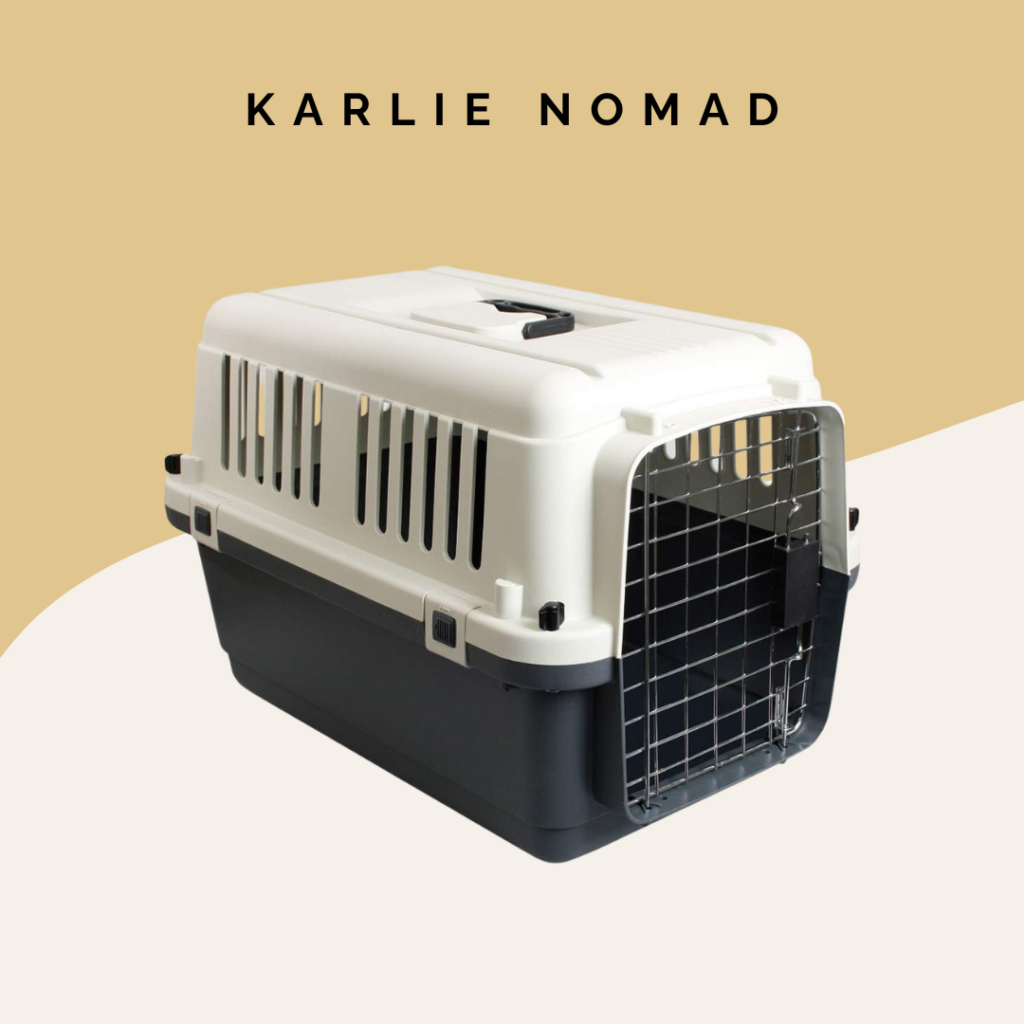
6. Emirates-approved pet crate
When choosing the right crate, you should focus on a few important things: it must be IATA approved, solid and hard-covered, Your pet must be able to stand up without touching the top, turn around comfortably and lie down naturally.

It also needs to have a proper ventilation, must be leak-proof and well secured with metal bolts. There also must be secure bowls for food and water inside that are easily accessible from outside but protected from spilling inside the cabin/cargo space. Another important thing is a quality bedding.
🐾 — Find pet travel essentials here — ✈️
7. Tips from Emirates travelers
Frequent Emirates travelers recommend a few key tips for your next flight with a pet:
Expect minimal communication during transit, so consider an AirTag or tracking plan. Also make sure your crate is larger than IATA standards—especially for short-nosed breeds, because staff often require extra space.
It’s good to plan and allow at least 6 hours for transit in Dubai so pets can visit the Pet Lounge and be checked by a vet!
8. Pros & Cons of choosing Emirates airline for pet travel
Emirates pet travel pros:
- High safety standards
- Many destinations worldwide
- Premium care for cargo
Emirates pet travel cons
- No in-cabin option for regular pets
- Strict breed restrictions for “in hold”
- Seasonal limits due to more extreme weather
- High fees
- Complex paperwork compare to European travel
9. FAQ about the Emirates pet policy
Does Emirates allow pets?
Yes, Emirates allows pets to travel, but they are generally not permitted in the passenger cabin. Most animals, including dogs and cats, must travel either as checked baggage in the cargo hold or through the Emirates SkyCargo service.
What are the requirements for a pet crate on Emirates?
Crates must be IATA-approved, rigid, and well-ventilated on all four sides. The container must be large enough for the pet to stand, turn, and lie down. For restricted breeds, Emirates may require crates to be at least 10% larger than standard to ensure better airflow.
How much does Emirates charge for pets?
Pets are charged as excess baggage based on the combined weight of the animal and its crate:
– Up to 23 kg (and 150 cm): $500 USD.
– 24 kg to 32 kg (up to 300 cm): $650 USD.
– Over 32 kg (up to 300 cm): $800 USD.
– Over 300 cm: Must be shipped as manifest cargo through SkyCargo.
Can pets fly in cabin to Dubai?
No, Emirates does not allow pets in the cabin on flights to Dubai, with the exception of trained service dogs or falcons on very specific routes from Pakistan. Furthermore, all pets whose final destination is Dubai must be processed as manifest cargo due to UAE government regulations.
Does Emirates allow any animals in the cabin?
The cabin is almost entirely animal-free. The only exceptions are certified service dogs and falcons (specifically on certain routes between Dubai and Pakistan). Every other pet, no matter how small or well-behaved, is relegated to the hold.
What breeds are restricted on Emirates as checked baggage?
Affenpinscher, American Bully, American Cocker Spaniel, American Pit Bull Terrier, American Staffordshire Terrier, Boerboel, Boston Terrier, Boxer, Brussels Griffon, Bulldog (all types), Bullmastiff, Bully Kutta (Alangu or Indian Mastiff), Cane Corso (Italian Mastiff), Cavalier King Charles Spaniel, Chihuahua (apple headed), Chow Chow, Dogo Argentino (Argentinian Mastiff), Dogue de Bordeaux (French Mastiff), Japanese Chin, Japanese Tosa, King Charles Spaniel, Lhasa Apso, Lowchen, Mastiff (all types and crosses), Neapolitan Mastiff, Newfoundland, Pekingese, Pit Bull Terrier, Presa Canario (including Perro de Presa Canario and Canary Mastiff), Pug (all types), Rottweiler, Shar-Pei, Shih Tzu, Staffordshire Bull Terrier, Tibetan Mastiff, and Tibetan Spaniel.
Is Emirates good for dogs?
Technically, Emirates is very safe because they use climate-controlled holds and a dedicated “Pet Lounge” in Dubai for transits. However, they are not “pet-friendly” in the modern sense. They treat animals as cargo rather than family members, and their long list of banned breeds makes them one of the most restrictive airlines for dog owners.