

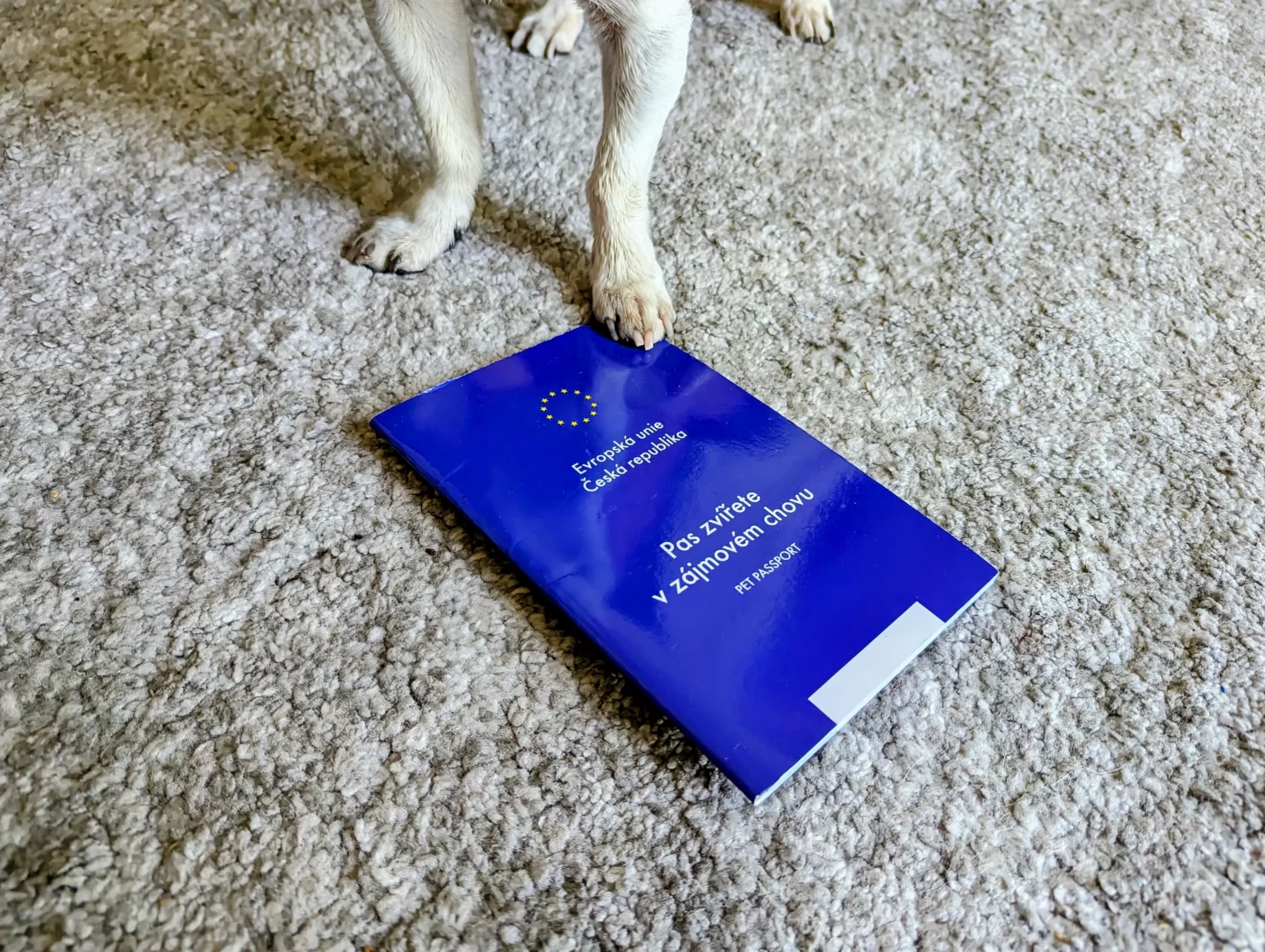
Flying with a dog isn’t just about booking your flight and packing a few snacks. Whether you’re going to Rome, Reykjavík, or traveling further abroad, the paperwork really does matter. But no worries — we’ll walk you through it all, so you and your furry sidekick can focus on enjoying the trip.
If you’re travelling with your dog between EU countries, an EU Pet Passport is usually the standard travel document. However, pets entering from outside the EU may need an Animal Health Certificate instead. The right paperwork depends on where you live, where you’re travelling from and your destination.
Pet travel documents you need for a flight
Before flying with your dog or cat, make sure you’ve got all the right paperwork sorted ahead of time. What you’ll need depends on a few things — where you’re going, which airline you’re flying with, and whether your pet is traveling within the EU or beyond.
You’ll usually need an EU Pet Passport or a health certificate, proof of recent vaccinations, and maybe even a few extra forms from the airline. It’s easy to forget about this stuff until the last minute, but without it, they might actually not let you fly.

EU Pet passport: What it is and how to get it
The EU Pet Passport is the standard travel document for eligible pet owners travelling with dogs, cats or ferrets between EU countries. It records your pet’s identification details, microchip number, rabies vaccination and any required treatments.
EU Pet Passports are issued by authorised veterinarians to eligible pet owners who normally live in the EU. Simply visiting an EU country doesn’t automatically make you eligible for one.
Some destinations, including Finland, Ireland and Malta, require additional tapeworm treatment for dogs. The 2026 EU pet travel rules also introduced changes affecting passports and other travel documents. Read our detailed guide to the new EU Pet Passport rules for 2026.
What’s required to get a pet passport
To get an EU Pet Passport, you must meet the applicable eligibility requirements, including normally residing in an EU country.
Your dog, cat or ferret must be properly identified, usually with a microchip, and its rabies vaccination details must be recorded correctly. The microchip must be implanted or read before the rabies vaccination is administered.
An authorised veterinarian can issue the passport after verifying the necessary information. The passport itself doesn’t have a fixed expiry date, but your pet must continue to meet the relevant health requirements when travelling.
If the passport runs out of space for vaccination or treatment records, an authorised veterinarian can arrange a replacement.
Some destinations also require additional treatments before travel, but these are not general conditions for obtaining the passport.
RELATED GUIDE Dog travel vaccinations Rabies requirements, boosters and travel timing
Pet health certificate vs pet passport: What’s the difference
The main difference is how these documents are used:
| Feature | EU Pet Passport | EU Animal Health Certificate |
|---|---|---|
| Purpose | Reusable travel document for eligible pets and owners. | Used for relevant journeys into the EU when an accepted passport cannot be used. |
| Issued by | An authorised veterinarian in an eligible country. | An official or authorised veterinarian, with official endorsement where required. |
| Validity | No fixed expiry date, provided the relevant records and vaccinations remain valid. | Generally 10 days for EU entry checks. After entry, onward travel for up to 6 months or until rabies vaccination expires, whichever comes first. |
| Typical use | Travel between EU countries and other journeys where the passport is accepted. | Entry from non-EU countries when EU rules require a health certificate. |
An EU Pet Passport records your pet’s identification and relevant health information. It doesn’t have a fixed expiry date, although the required vaccinations and treatments must remain valid.
An EU Animal Health Certificate confirms that your pet meets the applicable entry requirements. It is generally valid for 10 days from official issuance until the required EU entry checks. After entry, it can be used for further travel between EU countries for up to 6 months, or until the rabies vaccination expires, whichever comes first.
The exact procedure for issuing and endorsing the certificate depends on your country of departure. For example, travellers from the United States normally need a certificate prepared by a USDA-accredited veterinarian and endorsed by USDA.
2026 update: The EU introduced a new Animal Health Certificate model under Commission Implementing Regulation (EU) 2026/705. Certificates issued from 1 October 2026 must use the updated model, so always check that your veterinarian is using the current form.
Vaccination & Microchip requirements
For travel between EU countries, dogs, cats and ferrets generally need proper identification and a valid rabies vaccination.
-
Microchip identification: Your pet must be identified with a compliant microchip, or qualify for an accepted identification exception. The microchip must be implanted or read before the rabies vaccination is administered.
-
Valid rabies vaccination: Pets must normally be at least 12 weeks old when vaccinated. After completing a primary rabies vaccination course, you must wait at least 21 days before travelling, or longer if required for the vaccine used. A booster administered before the previous vaccination expires generally doesn’t require a new waiting period.
Some destinations also require tapeworm treatment for dogs. This applies to Finland, Ireland, Malta, Northern Ireland and Norway, generally between 24 and 120 hours before arrival, subject to applicable exceptions.
Make sure the required vaccinations and treatments are correctly recorded in your pet’s travel documents.
Airline-specific paperwork: What airlines may ask for
Your pet’s travel documents aren’t always the only paperwork you’ll need. Airlines have their own requirements for transporting animals, and these can differ depending on the route, your pet’s size and whether they’re travelling in the cabin, hold or as cargo.
Depending on the airline, you may need to:
-
Register your pet in advance and receive confirmation that space is available.
-
Complete an airline-specific pet transport form or declaration.
-
Provide your pet’s weight and the dimensions of the travel carrier.
-
Present additional veterinary documentation if required for your route or type of transport.
Some airlines require documents to be submitted before departure, while others check them at the airport. Always confirm the exact requirements and deadlines directly with your airline before booking.
Check your airline’s pet policy well in advance. Requirements for bookings, documentation and carrier dimensions can differ significantly between airlines and routes. Always confirm the rules before paying for your ticket.
RELATED GUIDE How to book a flight for your dog Pet reservations, airline approval and booking tips
Pet travel documents for non-EU travel
Travelling outside the EU? The documents your pet needs depend on your destination, country of departure and travel history.
For example, a valid EU Pet Passport may be accepted when travelling with your dog or cat from the EU to Great Britain. For dogs entering the United States from countries classified as rabies-free or low-risk, the CDC Dog Import Form is generally the main federal entry document, although additional requirements may apply.
Other destinations may require an official veterinary health certificate, an import permit, vaccination records or specific laboratory tests. Some certificates must be issued or endorsed within a particular period before arrival, but there is no universal 10-day rule for all international pet travel.
Always check your destination’s official animal import requirements and your airline’s pet policy well before departure.
Checklist: Prepare your dog’s travel paperwork
Here’s a quick overview of the documents your dog may need to fly — depending on your destination and airline.
Tick off each item as you prepare your dog’s travel paperwork.
Note: Not every item applies to every journey. Always check the requirements of your destination country and airline.
FAQs
Can my dog get an EU passport?
Yes – but only if your dog lives in an EU country or is visiting the EU and meets all health requirements. To get an EU pet passport, your dog must be microchipped and have a valid rabies vaccination. EU pet passports are only issued by authorized vets within the EU or certain non-EU countries approved by the EU.
How to get your dog an EU pet passport?
Visit an authorized vet in an EU country. They’ll check your dog’s microchip, administer (or verify) a rabies vaccination, and issue the passport. Some countries also require tapeworm treatment or additional vaccines depending on where you’re traveling to or from. Always check the destination country’s rules.
Can any vet issue an EU pet passport?
No – only EU-authorized veterinarians can issue the passport. Not all vets, even in the EU, are authorized to do this. It’s best to ask in advance or check with local veterinary authorities. If you’re in a non-EU country, you’ll need a different document (like a health certificate) accepted by the EU instead.
How long does it take to get an EU pet passport
You can often get it the same day – but not always. If your dog already has a valid microchip and rabies vaccine, the process is usually quick. But if a new rabies shot is needed, you’ll have to wait 21 days before the passport becomes valid for travel. So plan ahead accordingly!
Is the EU Pet Passport valid worldwide?
No – the EU Pet Passport is only valid for travel within the EU and to a few approved non-EU countries. If you’re flying to countries outside the EU (like the US, Canada, or Australia), you’ll usually need a veterinary health certificate issued shortly before departure, and sometimes additional paperwork or quarantine. Always check the entry requirements of your destination country in advance, as they vary widely.
Can I use an EU Pet Passport if my dog is from the UK or USA?
No. Dogs from the UK or USA can’t automatically use or get an EU Pet Passport. Since Brexit, UK pet passports are no longer valid for travel to the EU – you’ll need an Animal Health Certificate instead. For US dogs, only a vet health certificate approved by the EU is accepted. An EU Pet Passport can only be issued by an authorised vet within the EU, and usually only if you’re staying there longer-term.
What documents do I need to fly with a cat?
Within the EU, your cat needs an EU pet passport, microchip, and rabies vaccination. From non-EU countries (like the UK/USA), you’ll need an animal health certificate, proof of microchip, and vaccination. Some airlines may also ask for a fit-to-fly certificate — check before you travel.
Is EU Pet Passport valid worldwide?
No – the EU Pet Passport is only valid within EU countries and a few approved non-EU ones. For most international travel, you’ll need an animal health certificate instead.
Resources
- Your Europe EU Pet Passports and travel requirements
- European Commission Bringing a pet into the EU from a non-EU country
- European Commission EU pet travel FAQs and passport eligibility
- GOV.UK Taking your pet abroad from Great Britain
- GOV.UK Pet travel documents accepted for entry to Great Britain
- USDA APHIS International pet travel and veterinary certificates